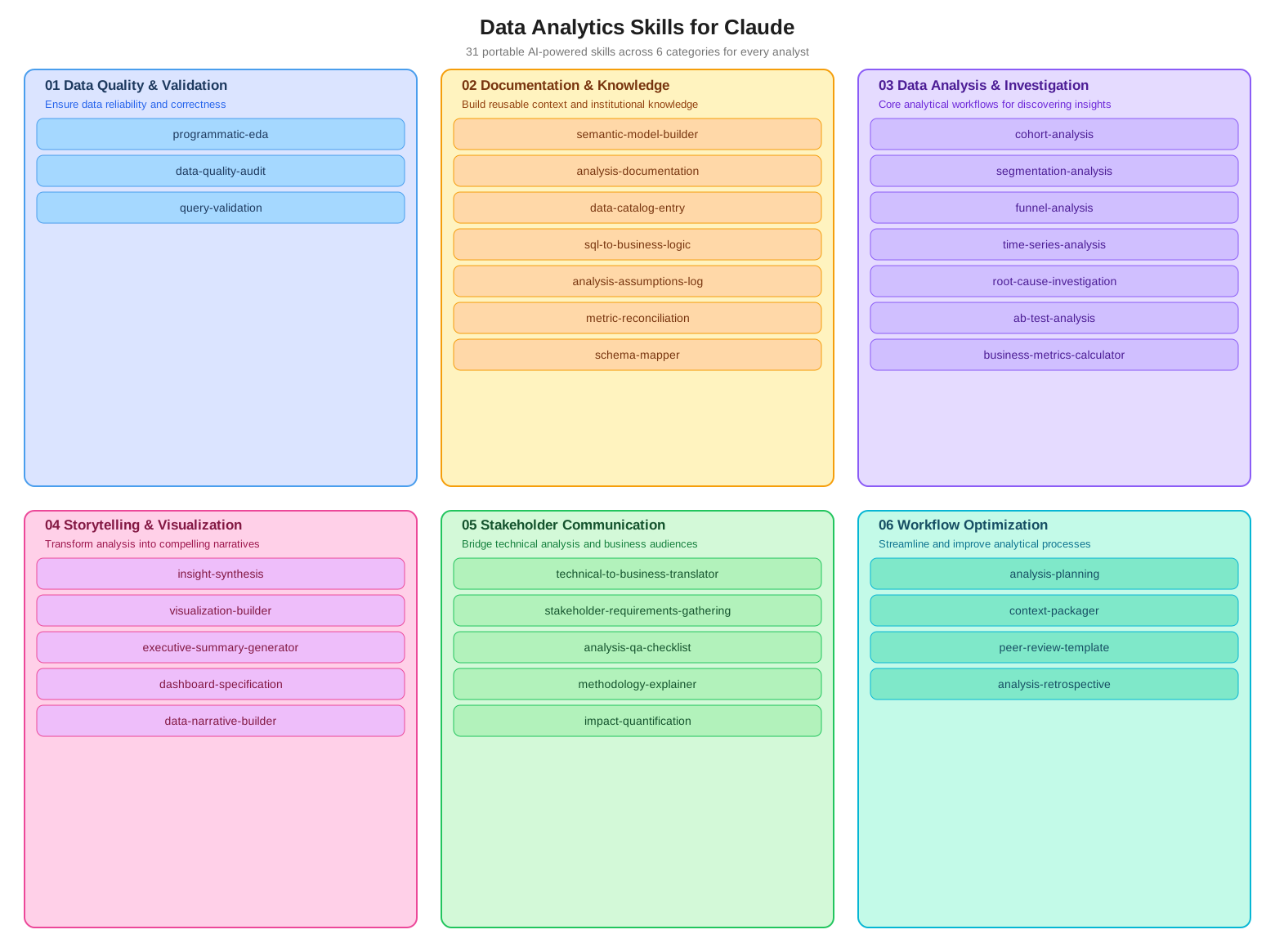
1---2name: metric-reconciliation-23description: Trace and resolve discrepancies when the same metric shows different values in two or more sources. Use before reporting, after pipeline changes, or when stakeholders question a number.4metadata:5 source: https://skillmd.com/skills/nimrodfisher/metric-reconciliation-26---78# Metric Reconciliation910# When to use11- Two dashboards or reports show different values for the same KPI12- A metric changed unexpectedly after a data pipeline update13- Stakeholders question a number and need an authoritative explanation14- Preparing to merge or deprecate a legacy reporting source15- Onboarding analysts to a new data model and validating it against the old one1617# Process181. **Define the metric and scope** — confirm the exact definition (numerator, denominator, filters, time zone) and the period under investigation. Mismatched definitions are the most common cause of discrepancy.192. **Pull values from both sources** — extract the metric values for the same period from each source. Record absolute values, row counts, and the query or calculation path used.203. **Compute the gap** — calculate the absolute difference and percentage gap. If the gap is within an agreed tolerance (e.g., ±0.1%), document it as accepted and close. See `references/reconciliation_patterns.md` for tolerance guidelines.214. **Trace the computation path** — walk each source's query or pipeline step by step. Common divergence points: different join types, filter order, null handling, date truncation, or deduplication logic.225. **Identify the root cause** — classify the cause using `references/metric_discrepancy_guide.md` (definition mismatch, data freshness, aggregation grain, calculation bug). Document the divergence point with a code snippet or query excerpt.236. **Resolve and document** — fix the calculation or accept a canonical source, then complete `assets/reconciliation_report_template.md` and share with stakeholders.2425# Inputs the skill needs26- The metric name and business definition (numerator, denominator, any known variants)27- Access to both sources (queries, dashboard SQL, or raw data)28- The time period showing the discrepancy29- Row counts or record-level data to enable line-by-line comparison if needed30- Any known recent changes to pipelines, schema, or business rules3132# Output33- `assets/reconciliation_report_template.md` — completed report showing source A vs. source B, the gap, root cause, and resolution status34- A corrected query or pipeline change (if a bug was found)35- A documented tolerance agreement (if the gap is acceptable)