
Python Patterns
Use this when implementing DeepSearch Python code.
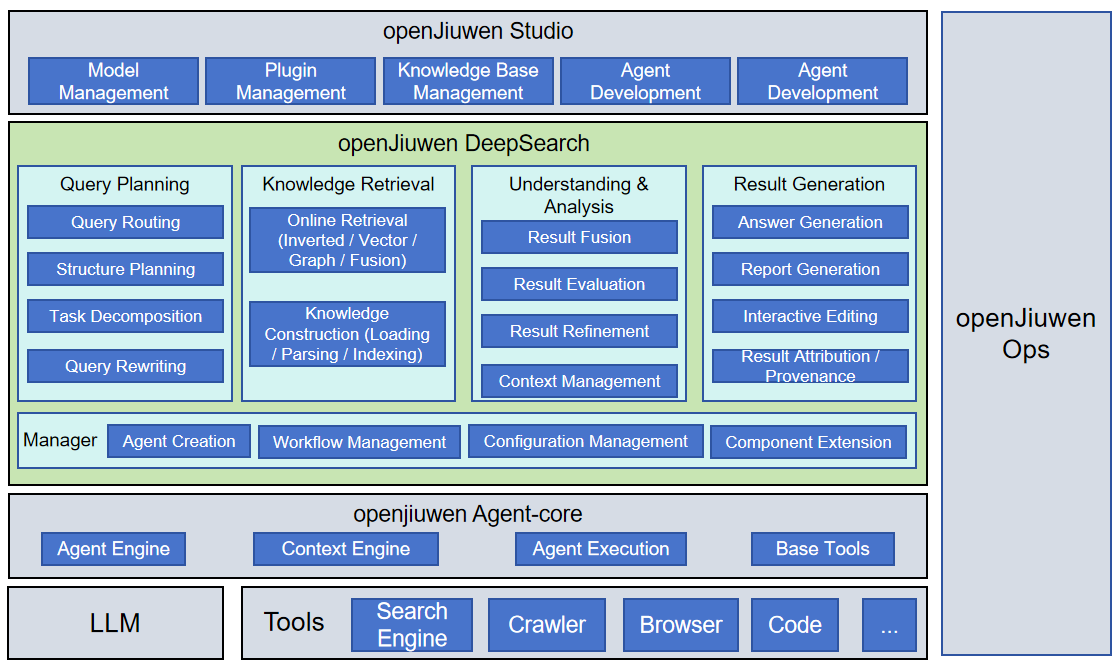
Layer Placement
- Research logic ->
openjiuwen_deepsearch/algorithm/ - Orchestration and nodes ->
openjiuwen_deepsearch/framework/openjiuwen/agent/ - Search/LLM adapters ->
framework/openjiuwen/tools/,framework/openjiuwen/llm/, orllm/ - Runtime config ->
openjiuwen_deepsearch/config/ - Shared exceptions/status ->
openjiuwen_deepsearch/common/ - Logging/path/validation helpers ->
openjiuwen_deepsearch/utils/ - API/persistence/report conversion ->
server/
Config and Secrets
- Reuse Pydantic config models instead of passing unstructured dicts.
- Preserve
bytearraysecret fields where existing models use them. - Clear mutable secrets with
zero_secretwhen following nearby patterns.
Exceptions
Use StatusCode plus Custom*Exception for business errors:
raise CustomValueException(
    error_code=StatusCode.PARAM_CHECK_ERROR_COMMON_INVALID.code,
    message=StatusCode.PARAM_CHECK_ERROR_COMMON_INVALID.errmsg.format(param="name"),
)
Catch third-party exceptions at subsystem boundaries and convert them before they cross SDK/server public surfaces.
Logging
- Use
logging.getLogger(__name__). - Use lazy placeholders.
- Respect
LogManager.is_sensitive()and anonymization helpers. - Reset
session_id_ctxtokens infinallyblocks.
Path Safety
- Validate output directories with
ensure_safe_directoryor equivalent safe-base checks. - Use
tmp_pathin tests. - Keep generated report/log artifacts out of the repo root.
Prompt Changes
- Prompt templates live in
algorithm/prompts/. - Update Python callers and tests when prompt variables change.
- Treat web/tool output as untrusted evidence.
Async Cleanup
- Await or cancel background tasks.
- Close async clients, storage handles, and DB sessions.
- Reset context variables on every exit path.